

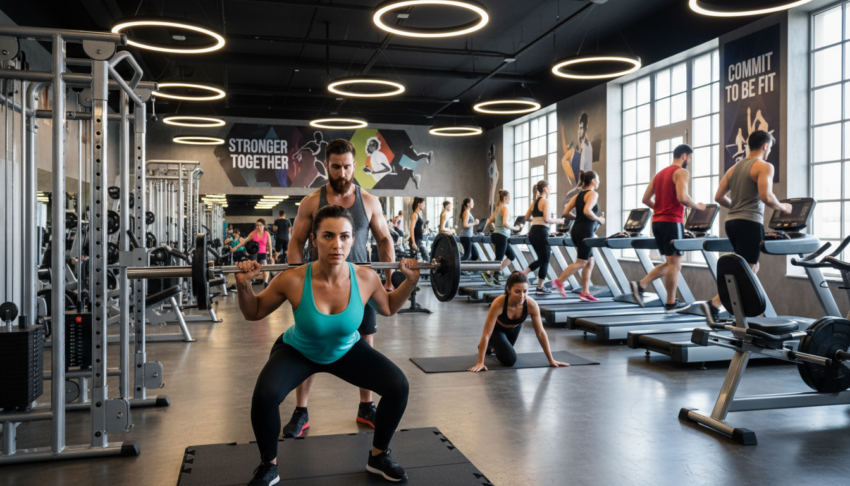
Starting a new health journey is an exciting step toward reaching your fitness goals. Finding the right path can sometimes feel overwhelming, but a clear plan is truly life-changing. You deserve a personalized approach that fits your unique lifestyle and energy levels.
A well-structured workout routine helps you stay motivated while seeing real progress over time. Instead of following generic advice, focusing on specific movement patterns makes every minute effective. Developing a consistent habit is the most important factor for long-term health.
Consistency acts as the foundation for lasting results in your daily exercise habits. This guide provides an overview of training strategies designed to help you reach your peak potential. Let us explore the best ways to transform your body and mind together.
Key Takeaways
- Personalized plans lead to faster and more sustainable results.
- Setting realistic milestones keeps your motivation levels high.
- Matching your activity type to your body type is essential.
- Rest and recovery are just as important as the training itself.
- Tracking progress helps you adjust your strategy for better growth.
Understanding Your Fitness Goals
Understanding your fitness goals is the foundation of a successful training program. It’s not just about exercising regularly; it’s about exercising with a purpose. To achieve this, you need to set goals that are not only clear but also achievable and aligned with your personal health objectives.
Setting SMART Goals
Setting Specific, Measurable, Achievable, Relevant, and Time-bound (SMART) goals is crucial. For instance, instead of saying “I want to be healthier,” a SMART goal would be “I will reduce my body fat percentage from 25% to 20% within the next 3 months by working out 3 times a week.” This approach helps in creating a focused workout plan.
- Specific: Clearly define what you want to achieve.
- Measurable: Quantify your goal so progress can be tracked.
- Achievable: Ensure the goal is realistic based on your current lifestyle and constraints.
- Relevant: Align your goal with your broader fitness and health aspirations.
- Time-bound: Set a specific deadline for achieving your goal.
The Importance of Personalization
Personalization is key to a successful fitness journey. What works for someone else may not work for you. Factors such as age, current fitness level, health conditions, and personal preferences play a significant role in determining the most effective workout routine. For example, a young adult looking to build muscle might focus on strength training, while an older adult might prioritize flexibility and cardiovascular health.
By understanding your unique needs and setting SMART goals, you can create a personalized fitness plan that is both effective and sustainable.
Types of Workouts Explained
When it comes to achieving your fitness goals, understanding the different types of workouts is crucial. A well-structured exercise routine typically includes a combination of various workout types to ensure overall fitness and help you reach your objectives.
Strength Training Basics
Strength training is a fundamental component of any workout routine. It involves using resistance to build muscle mass and increase overall strength. This type of training can be achieved through various methods, including weightlifting, resistance band exercises, and bodyweight exercises like push-ups and squats.
One of the key benefits of strength training is its ability to boost metabolism, helping your body burn more calories at rest. Additionally, it enhances bone density, reducing the risk of osteoporosis and fractures. To get started with strength training, focus on exercises that work multiple muscle groups at once, such as deadlifts and bench presses.
Cardiovascular Workouts
Cardiovascular exercises, also known as cardio, are designed to improve heart health and increase endurance. These workouts typically involve activities that raise your heart rate and keep it elevated for a period, such as running, cycling, and swimming.
Cardio exercises are excellent for burning calories and aiding in weight loss. They also improve cardiovascular health by strengthening the heart and increasing blood flow. For a well-rounded cardio routine, consider incorporating both steady-state cardio (like jogging) and high-intensity interval training (HIIT).
Flexibility and Balance Exercises
Flexibility and balance exercises are crucial for maintaining range of motion and preventing injuries. These exercises help improve flexibility by stretching muscles and tendons, while balance exercises enhance coordination and stability.
Activities like yoga and Pilates are excellent examples of flexibility and balance exercises. They not only improve flexibility but also strengthen core muscles and enhance overall physical balance. Incorporating these exercises into your routine can help reduce the risk of injury and improve overall athletic performance.
Essential Workout Equipment for Home Gyms
Creating a home gym can be a game-changer for your fitness journey, providing the convenience and flexibility to work out on your own terms. With a well-equipped home gym, you can achieve your fitness goals without the need to visit a commercial gym.
When setting up your home gym, it’s essential to consider the types of equipment that will help you achieve your weightlifting and training goals. The right equipment can make a significant difference in your workout routine, allowing you to target different muscle groups and stay motivated.
Weights and Resistance Bands
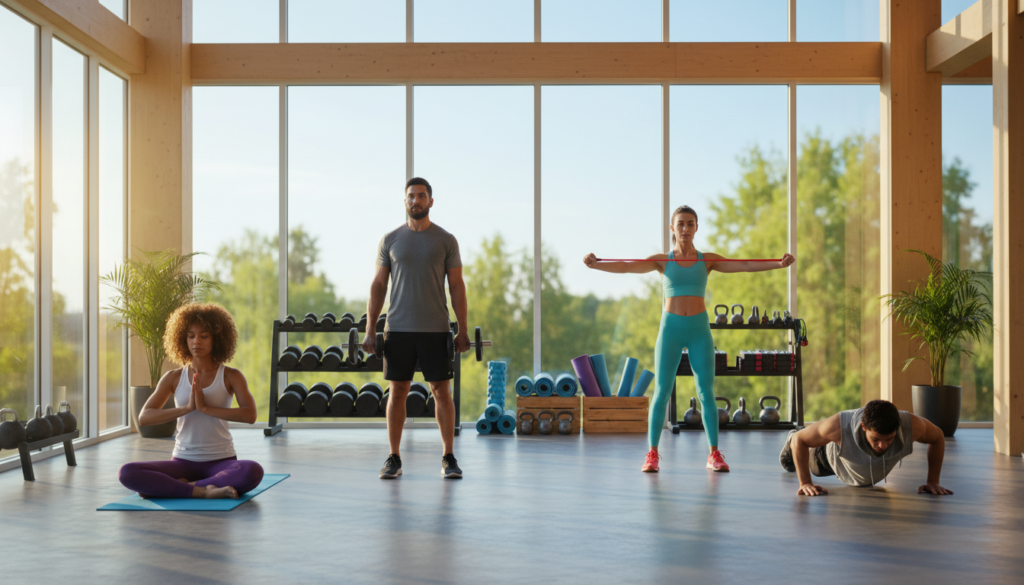
Weights are a fundamental component of any home gym, providing a versatile way to perform a variety of exercises. Dumbbells, kettlebells, and barbells are popular choices, offering a range of weight options to suit different fitness levels.
Resistance bands are another excellent option, providing a lightweight and portable way to work out. They are ideal for strength training and can be used to target specific muscle groups.
Exercise Mats and Stability Balls
An exercise mat is a must-have for any home gym, providing a comfortable and non-slip surface for floor exercises. It’s perfect for yoga, Pilates, and other bodyweight exercises.
A stability ball is another valuable piece of equipment, helping to improve core strength, balance, and flexibility. It’s also great for stretching and can be used as a bench for weightlifting exercises.
Cardio Machines Overview
Cardio machines are an essential part of a well-rounded home gym, providing an effective way to improve cardiovascular fitness. Treadmills, stationary bikes, and ellipticals are popular options, offering a range of workout intensities and styles.
When choosing a cardio machine, consider your fitness goals and the space available in your home gym. Look for machines that are compact, durable, and easy to use.
Creating a Balanced Workout Routine
Creating a balanced workout routine is essential for maximizing your exercise benefits. A well-rounded fitness regimen helps ensure that you’re targeting all aspects of physical fitness, including strength, cardiovascular health, and flexibility.
The Importance of Variety
Incorporating a variety of exercises into your routine is crucial for avoiding plateaus and preventing overuse injuries. Variety keeps workouts interesting and challenging, which can help maintain motivation and adherence to your fitness program.
- Includes different types of exercises such as strength training, cardio, and flexibility exercises.
- Targets different muscle groups to ensure overall muscle balance.
- Reduces the risk of overuse injuries by not repeatedly stressing the same joints and muscles.
Combining Strength and Cardio
A balanced workout routine should include a mix of strength training and cardiovascular exercises. Strength training helps build muscle and boost metabolism, while cardio exercises improve heart health and burn calories.
- Strength training: Focus on exercises that work multiple muscle groups at once, such as squats, deadlifts, and bench press.
- Cardio exercises: Include activities like running, cycling, or swimming to improve cardiovascular health.
Scheduling Rest Days
Rest days are just as important as workout days. Adequate rest allows your muscles to recover and rebuild, making them stronger over time.
- Include at least one or two rest days per week.
- Use rest days to engage in light activities like stretching or yoga to aid in recovery.
Beginner-Friendly Workout Routines
Embarking on a fitness journey can be daunting, but with the right beginner-friendly workout routines, you can set yourself up for success. As a beginner, it’s essential to start with exercises that are easy to follow and effective in achieving your fitness goals.
Full-Body Workouts for Starters
Full-body workouts are an excellent way to begin your exercise journey. They engage multiple muscle groups simultaneously, providing an efficient way to improve overall health and fitness. A typical full-body workout might include squats, lunges, push-ups, and rows, among other exercises.
These workouts are beneficial because they help build a strong foundation, improve coordination, and boost metabolism. For beginners, starting with bodyweight exercises or light weights is advisable to prevent injury and gradually increase intensity.
Quick Cardio Sessions
Cardiovascular exercises are crucial for improving heart health and burning calories. Quick cardio sessions, such as jogging in place, jumping jacks, or cycling, can be done in short intervals, making them perfect for those with busy schedules.
These sessions not only improve cardiovascular health but also enhance endurance and burn fat. Beginners can start with short sessions (20-30 minutes) and gradually increase the duration as their fitness level improves.
Stretching for Flexibility
Flexibility is a critical component of overall fitness. Stretching exercises help improve range of motion, reduce muscle soreness, and prevent injuries. Beginners should incorporate stretching into their routine, focusing on major muscle groups like hamstrings, quadriceps, and hip flexors.
Regular stretching can also enhance posture and reduce the risk of chronic pain. It’s recommended to stretch after workouts when muscles are warm, or as a standalone session to improve flexibility and relaxation.
Intermediate Workout Plans to Level Up
Elevate your fitness journey with intermediate workout plans that focus on intensifying your training, cardio, and strength exercises. At this stage, you’re looking to challenge your body in new ways, pushing past plateaus and achieving greater fitness milestones.
To effectively level up, it’s essential to introduce variety and intensity into your routine. This can be achieved through several methods, including split training techniques, circuit workouts, and High-Intensity Interval Training (HIIT).
Split Training Techniques
Split training involves dividing your workout routine into multiple days, each focusing on a different muscle group or type of exercise. This allows for more intense workouts and can help prevent overtraining.
- Upper/Lower Split: Alternating between upper body and lower body days.
- Push/Pull/Legs Split: Dividing your workout into pushing exercises (chest, shoulders, triceps), pulling exercises (back, biceps), and leg exercises.
- Muscle Group Split: Focusing on specific muscle groups each day, such as chest and triceps one day, and back and biceps the next.
Circuit Workouts to Boost Endurance
Circuit training is a great way to improve cardiovascular endurance while also building strength. It involves performing a series of exercises in quick succession, with minimal rest in between.
- Choose 5-6 exercises that target different muscle groups.
- Perform each exercise for 30-60 seconds.
- Rest for 15-30 seconds between exercises.
- Complete 2-3 circuits, resting for 1-2 minutes between circuits.
HIIT Workouts Explained
High-Intensity Interval Training (HIIT) involves short bursts of high-intensity exercise followed by brief periods of rest. This type of training is highly effective for improving cardiovascular fitness and burning calories.
A typical HIIT workout might involve 30 seconds of sprinting or burpees, followed by 30 seconds of rest. This cycle is repeated for 15-20 minutes, adjusting the intensity and rest periods as needed.
By incorporating these intermediate workout plans into your fitness routine, you’ll be able to challenge yourself in new ways, avoid plateaus, and continue making progress towards your fitness goals.
Advanced Workout Strategies
For those who have mastered the basics, advanced workout strategies can be the key to unlocking new levels of strength and fitness. As you continue on your fitness journey, it’s essential to challenge yourself with more complex and demanding techniques.
Advanced training methods are not just about increasing the intensity; they’re about strategically planning your workouts to achieve specific goals, whether it’s enhancing strength, improving endurance, or mastering complex lifts.
Powerlifting and Olympic Lifting Techniques
Powerlifting and Olympic lifting are two disciplines that require a high level of strength, technique, and practice. Powerlifting focuses on three main lifts: the squat, bench press, and deadlift. Olympic lifting, on the other hand, involves the snatch and the clean and jerk. Both require precision and power.
- Focus on proper form and technique to avoid injury.
- Gradually increase the weight to build strength.
- Practice with a qualified coach or experienced lifter.
Unconventional Training Methods
Unconventional training methods can add variety to your workout routine and challenge your body in new ways. Techniques such as isometric training, plyometrics, and blood flow restriction training can be effective for advanced individuals looking to break through plateaus.
- Isometric training involves contracting muscles without moving the joints.
- Plyometrics focuses on explosive movements to improve power.
- Blood flow restriction training involves restricting blood flow to the muscles during exercise.
Engaging in Competitive Fitness
For those who enjoy the competitive aspect of fitness, engaging in competitions can be a great motivator. Whether it’s powerlifting, Olympic lifting, or other forms of competitive fitness, setting a competition goal can help you stay focused and driven.
To prepare for a competition, it’s essential to:
- Develop a structured training plan with a coach or experienced trainer.
- Focus on specific lifts or skills required for the competition.
- Practice under competition conditions to build mental toughness.
Incorporating Flexibility and Recovery
To maximize the benefits of exercise, it’s essential to focus on flexibility and recovery techniques. A well-rounded fitness routine isn’t just about the intensity or frequency of workouts; it’s also about ensuring your body can adapt and recover from the stress you’re putting it under. Flexibility and recovery are interlinked components that play a crucial role in enhancing performance, reducing injury risk, and promoting overall wellness.
The Role of Stretching
Stretching is a fundamental aspect of improving flexibility. It involves lengthening the muscles and tendons to increase range of motion and reduce stiffness. Regular stretching can enhance athletic performance by allowing for more efficient movement and reducing the risk of injury. There are different types of stretching, including static, dynamic, and proprioceptive neuromuscular facilitation (PNF) stretching, each with its unique benefits.
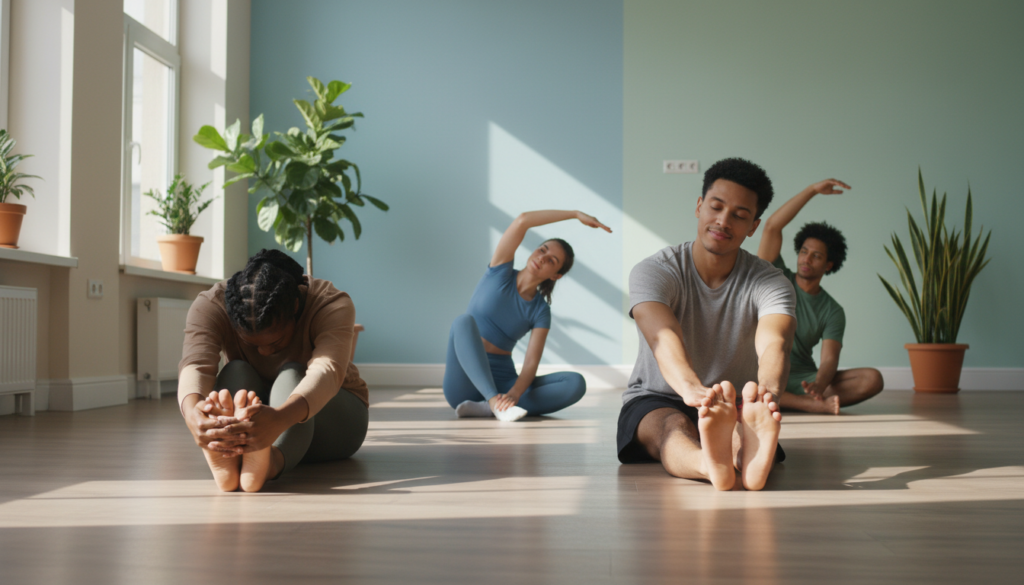
For instance, static stretching involves holding a stretch for a period, usually 15-30 seconds, to lengthen the muscle. Dynamic stretching, on the other hand, involves moving through a range of motion while maintaining muscle contractions, which can be particularly beneficial as a warm-up before workouts.
Benefits of Yoga and Pilates
Yoga and Pilates are low-impact exercises that not only improve flexibility but also contribute to overall health by enhancing strength, balance, and body awareness. Yoga, with its roots in ancient practices, combines physical postures, breathing techniques, and meditation to promote relaxation and reduce stress. Pilates focuses on core strength, posture, and controlled movements to improve physical fitness and mental well-being.
Both practices are beneficial for individuals of all fitness levels and can be modified to suit different needs and goals. They promote mind-body connection, which is essential for maintaining motivation and achieving a balanced lifestyle.
Active Recovery Techniques
Active recovery involves engaging in low-intensity activities after intense workouts to facilitate the body’s repair processes. Techniques such as light cardio, foam rolling, and self-myofascial release can help reduce muscle soreness and improve circulation. These methods aid in the removal of metabolic waste products that can build up during exercise, thereby enhancing recovery.
- Light cardio, such as jogging or cycling, promotes blood flow without exerting excessive strain.
- Foam rolling and self-myofascial release techniques help in relieving muscle tension.
- Contrast showers, involving alternating between hot and cold water, can also aid in reducing inflammation and improving recovery.
Tracking Your Progress Effectively
Effective progress tracking is the backbone of a successful fitness regimen. It not only helps in achieving your health goals but also keeps you motivated throughout your journey. By leveraging the right tools and techniques, you can monitor your progress accurately and make necessary adjustments to your workout routine.
Fitness Apps and Devices
In today’s digital age, numerous fitness apps and devices are available to help track your workouts, nutrition, and overall health. Apps like MyFitnessPal and Fitbit allow you to log your daily activities, monitor your calorie intake, and even track your sleep patterns. Wearable devices such as smartwatches and fitness trackers provide real-time data on your heart rate, steps taken, and calories burned.
As noted by fitness expert,
“Using technology to track your fitness journey can significantly enhance your ability to stay on track and reach your goals.”
By utilizing these tools, you can gain valuable insights into your progress and make data-driven decisions to optimize your workout routine.
Keeping a Workout Journal
Besides digital tools, maintaining a workout journal is an effective way to track your progress. Writing down your workouts, including the exercises, sets, reps, and weight lifted, helps you monitor your strength gains and identify areas for improvement. It also allows you to reflect on your workouts and make adjustments as needed.
- Record your workouts, including exercises and weights.
- Track your progress over time.
- Identify patterns and areas for improvement.
Understanding Metrics and Goals
To track your progress effectively, it’s crucial to understand the metrics that matter to your fitness goals. Whether you’re focusing on weight loss, muscle gain, or endurance, setting specific, measurable goals is essential. Regularly reviewing your progress against these goals helps you stay focused and motivated.
As emphasized by a study on goal setting,
“Specific, challenging, and attainable goals lead to higher levels of motivation and performance.”
By understanding and applying the right metrics, you can tailor your workout routine to achieve your desired outcomes.
Nutrition Tips to Fuel Your Workouts
Fueling your body with the right nutrients is crucial for optimizing your workout performance and recovery. A well-planned nutrition strategy supports your fitness goals, whether you’re focusing on strength training, cardiovascular endurance, or flexibility exercises.
Pre-Workout Nutrition Essentials
Consuming the right foods before a workout can significantly enhance your performance. Complex carbohydrates such as whole grains, fruits, and vegetables provide sustained energy. It’s also beneficial to include lean protein sources like chicken, fish, or tofu to support muscle function.
A balanced pre-workout meal should be eaten 1-3 hours before exercising. For example, a meal consisting of brown rice, grilled chicken, and steamed vegetables is an excellent choice. For those with less time, a small snack like a banana with almond butter or a handful of nuts can be consumed 30-60 minutes prior to the workout.
Post-Workout Recovery Foods
After a workout, it’s essential to refuel your body with the right nutrients to aid in recovery. Protein-rich foods are vital for muscle repair and growth. Consuming a mix of carbohydrates and protein within 30-60 minutes post-workout can help replenish energy stores and support muscle recovery.
- Greek yogurt with berries and honey
- Grilled salmon with quinoa and roasted vegetables
- A smoothie with protein powder, banana, and spinach
Hydration Guidelines for Athletes
Adequate hydration is critical for physical performance and overall health. Water is the best beverage for hydration, and it’s recommended to drink at least 8-10 glasses a day. For intense or long-duration workouts, consider incorporating electrolyte-rich beverages to replenish lost salts.
Monitoring your urine color is a simple way to check your hydration status; it should be pale yellow. Additionally, weighing yourself before and after workouts can help determine the amount of water lost, which should be replenished.
Staying Motivated and Committed
Staying motivated is crucial for achieving your fitness goals, and there are several ways to keep your momentum going. Consistency is key to seeing progress in your exercise routine, and maintaining motivation is what drives this consistency.
One of the most effective ways to stay motivated is by having a supportive environment. This can be achieved by finding a workout buddy or joining a training class. Exercising with others can make the experience more enjoyable and help you stay accountable.
Finding Workout Partners or Classes
Exercising with a partner or group can significantly boost your motivation. It introduces a social element to your fitness routine, making it more enjoyable and helping you stick to your schedule. Look for local gyms or studios that offer group classes that align with your interests and training goals.
Having a workout partner can also provide an added motivation, as you’re more likely to show up to a session if you know someone is counting on you. Moreover, the camaraderie and shared experience can make the process more enjoyable and help you push through challenging times.
Setting Mini-Goals for Success
Setting achievable mini-goals is another effective strategy for maintaining motivation. By breaking down your larger fitness goals into smaller, manageable objectives, you can experience a sense of accomplishment more frequently. This can be particularly motivating, as it provides tangible evidence of your progress.
For example, if your goal is to run a marathon, start by setting mini-goals such as running a certain distance without stopping, then gradually increase your targets. Celebrating these small victories can help keep you motivated and engaged in your training program.
Celebrating Your Achievements
Celebrating your achievements, no matter how small they may seem, is crucial for maintaining motivation. Recognizing your progress can help reinforce positive behaviors and motivate you to continue pushing forward with your exercise routine.
Whether it’s treating yourself to a new workout outfit, enjoying a relaxing post-workout massage, or simply reflecting on how far you’ve come, celebrating your achievements can provide a much-needed boost to your motivation. It’s a reminder that your hard work is paying off and that you’re one step closer to achieving your fitness goals.
Adapting Your Routine for Life Changes
Life is full of changes, and your workout routine should be flexible enough to adapt. Whether you’re expecting a baby, dealing with an injury, or facing budget constraints, there are ways to maintain your health and wellness goals.
Pregnancy and Postpartum Considerations
During pregnancy, it’s essential to modify your exercises to ensure safety for both you and your baby. Prenatal yoga and low-impact cardio are excellent options. After giving birth, postpartum workouts can help regain strength and energy.
Adjusting for Aging and Injuries
Aging and injuries require adjustments to your workout routine. Low-impact exercises like swimming or cycling can be easier on the joints. Incorporating rehabilitation exercises can also help recover from injuries while maintaining overall fitness.
Staying Fit on a Budget
Maintaining a gym routine doesn’t have to be expensive. Bodyweight exercises, outdoor activities, and community fitness programs offer affordable ways to stay active. Investing in a few key pieces of equipment for home workouts can also be cost-effective in the long run, supporting your overall health and wellness journey.