

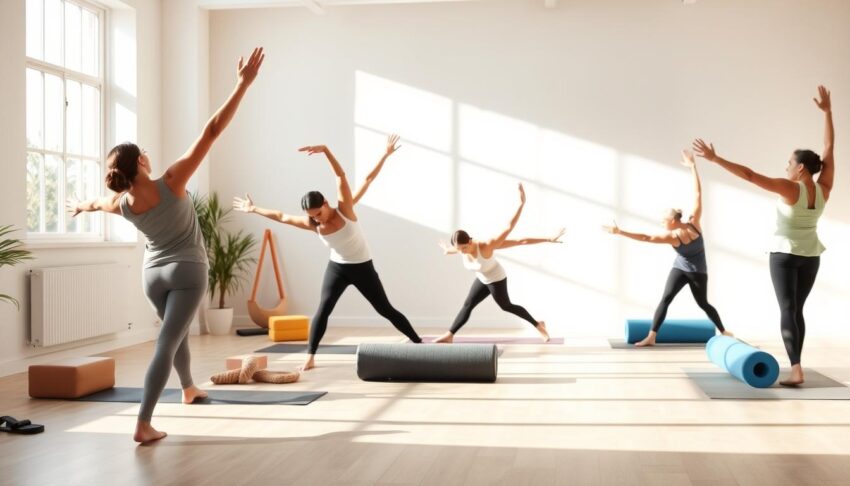
Want less stiffness and more freedom in your day? This article shows how simple moves improve your health, boost mobility, and help your body feel better during work and play.
We explain why these small habits matter now and how to build a short plan you will actually follow. Learn when to use dynamic moves before activity and when to hold static positions after a workout.
Quick science, practical tips, and safety cues are all included. You’ll get timing guidance (5–10 minutes pre and post), common focus areas like hips, hamstrings, calves, shoulders, and neck, and clear safety rules: never bounce, don’t stretch cold, and check with a pro if you have injuries.
Whether you want fast relief from desk tightness or long-term gains in range motion, this friendly guide helps you get started with straightforward steps and results you can feel.
Key Takeaways
- Small daily moves can ease stiffness and improve mobility.
- Do 5–10 minutes of dynamic activity before exercise.
- Use 5–10 minutes of static holds after workouts for deeper length.
- Focus on hips, hamstrings, calves, shoulders, neck, and lower back.
- Avoid bouncing, never stretch cold, and modify for injuries.
Why stretching matters right now for mobility, posture, and overall health
A few focused minutes each week can change how your joints move and how your body feels. Lengthening the muscles improves joint range, so everyday tasks like reaching, turning, and bending become easier.
Targeted work also eases imbalances that pull you out of posture. Pairing gentle length work with strength helps align the body and can lower musculoskeletal pain tied to long sitting.
For people who exercise, dynamic moves before activity prime movement, while post-workout holds aid recovery. Over weeks and months, consistent sessions build lasting change.
- Improves joint range at hips, shoulders, and spine
- Reduces daily tension in neck, shoulders, hips
- Easy to add into a busy schedule with little cost or gear
Notice small shifts in comfort and posture as range grows — progress adds up with regular time.
Benefits of stretching exercises
Small, regular moves can change how your body feels day to day and make basic tasks easier. Regular stretching increases flexibility and joint range, so squatting, reaching, and lifting feel smoother. That added range improves everyday motion and builds confidence when you move.

Increase flexibility and recovery
Improved blood flow helps muscles recover faster and lowers delayed soreness after hard work. Dynamic warm-ups before activity ready your nervous system and boost power. Static holds afterward aid circulation and reduce next-day tightness.
Protect posture and ease common aches
Targeting tight hip flexors, chest, and calves supports an upright stance and more comfortable sitting. Gentle hip and lower-back work can ease back pain and improve function. Slower breathing during holds also calms the mind and can ease neck and shoulders tension.
- Lower injury risk: easing stiffness cuts strain chance when combined with smart training.
- Start small: pick hips and shoulders first to feel wins in a week or two.
If pain persists or you have a known condition, consult a healthcare professional to tailor the right plan.
Stretching techniques that work: static, dynamic, and more
Simple, targeted methods can improve your motion and lower injury risk. Use warm dynamic moves before activity and longer holds after to match the body’s needs at each stage.
Static holds for after training
Static stretches are steady positions you hold to lengthen a tight muscle. Aim for about 30–60 seconds per stretch after workouts when tissues are warm.
Longer holds help gradual lengthening without extra strain and support recovery when paired with calm breathing.
Dynamic moves for readiness
Dynamic movements take joints through full range without holding the end point. Leg swings, arm circles, and walking lunges raise temperature and improve motion before sport or heavier lifts.
Start with a brief five-minute warm-up (light cardio) to protect tissue and get more from these movements.
PNF, active, passive — and what to avoid
PNF, active, and passive methods can deepen range. A partner or strap is useful for safe PNF or assisted holds.
Avoid ballistic bouncing; it spikes injury risk and doesn’t reliably improve flexibility.
- Sequence: dynamic before, static/PNF after.
- Keep it gentle: tune intensity to a mild stretch and adjust over weeks.
- Consistency and calm breathing increase the nervous system’s tolerance to new ranges.
How to start a stretching routine you’ll actually stick with
A simple plan that you can repeat is the key to lasting mobility gains. Keep sessions brief, clear, and tied to something you already do. This makes them easy to repeat and track.

When to fit movement
On training days, do 5–10 minutes of dynamic work before your workout and 5–10 minutes after for cooldown. That split primes and then helps recovery.
How long to hold and how much time
For post-workout holds, aim for 30–60 seconds per target. Total session time of 20–30 minutes several times a week drives progress without burnout.
How often and what to target
Stretch at least two times per week; three times gives faster wins. Prioritize calves, hamstrings, hip flexors, quads, shoulders, neck, and lower back.
Start with two lower-body and two upper-body areas so you don’t get overwhelmed.
- Pair sessions with workouts or daily cues to make the routine stick.
- Track minutes and holds so you can steadily increase range without guessing.
Safety first: reduce injury risk and make stretching feel good
Putting safety first helps you gain range while lowering the chance of setbacks.
Warm tissue is more pliable and less likely to strain. Never start when muscles are cold. Spend 5–10 minutes on light cardio or movement before any pre-activity stretch.
Warm up before you stretch and never stretch cold
Increase body temperature with brisk walking, cycling, or joint swings. This simple time investment helps prevent injury and makes each stretch feel smoother.
Stretch to mild tension, not pain—avoid bouncing
Move into a position slowly until you feel gentle tension. Hold steady without bouncing. If pain spikes, ease off; sharp signals mean something needs attention.
Modify for existing injuries and talk to a healthcare professional
If you have an acute or chronic injury, follow clinician guidance and use props—straps, towels, or a wall—to control range and protect joints.
“Use sensation as your guide: aim for gentle tension, not pain, and ease off immediately if discomfort increases.”
- Space sessions so tissue has time to recover; too much can irritate tight muscles.
- Set a timer for consistent holds and breathe steadily to reduce guarding.
- Stop any move that causes sharp pain, pins-and-needles, or lasting soreness.
Five-minute stretch routines for busy days
A short, focused sequence can give fast relief when time is tight. These micro-routines target common desk and workout tensions so you can get started in minutes and feel better through the day.

Desk break relief: neck and shoulder stretches in seconds
Try a 60–90 second desk loop. Do gentle neck side tilts, chin tucks, and a shoulder cross-body hold for 10–30 seconds per side.
Simple moves like these reduce stiffness and revive focus without changing your routine.
Post-workout cool-down: lower body stretches for hips, quads, calves
After training, spend five minutes on a trio: standing quad stretch, wall calf stretch, and a half-kneeling hip flexor hold. Aim for 30 seconds per side.
Back-friendly flow: gentle movements for lumbar relief and posture
For back comfort, cycle cat-cow, child’s pose (30–60 seconds), then a supine hamstring stretch. Move slowly and breathe to ease tension in the lower back.
Morning mobility: dynamic stretches to wake up your body
Wake your body with 30 seconds of leg swings, 30 seconds of arm circles, then a few walking lunges. This short primer helps joints move smoothly for the day ahead.
- Keep it five minutes: set a timer and flow from one move to the next.
- Tailor intensity: choose shorter holds for a quick reset or longer holds for deeper relief.
- Consistency wins: repeat a favorite sequence most days and pin a short checklist where you can see it to get started fast.
“Breathe steadily and move with control—smooth, timed sequences give the best relief.”
Make progress you can feel: tips to increase flexibility on a regular basis
Aim for clear, repeatable targets so your body adapts and flexibility improves across weeks.
Set a simple plan: two to three sessions per week as a starter. Track the same range motion landmarks each session so small gains are easy to spot.
Set goals and extend hold time
Begin with static holds of about 30 seconds and slowly work toward 45–60 seconds. Increasing how long you hold stretch positions helps tissues remodel without extra strain.
Track and prioritize
Keep a short log with time, holds, and angles. Focus on one or two muscle groups—hip flexors and hamstrings first—to speed visible change.
- Routine: aim for 20–30 minutes several times weekly.
- Layer: add gentle PNF or active work when progress stalls—this can provide extra stretching help.
- Respect recovery: tissue adapts on a regular basis when stimulus and rest are balanced.
Celebrate small wins—an inch deeper or less resistance shows real progress.
Reassess every 2–4 weeks and tweak the routine so your flexibility keeps improving without irritation.
Conclusion
Finish with a simple plan you can repeat so your body keeps gaining motion and comfort.
Consistent stretching improves flexibility, supports posture, and helps daily movement feel easier. Build a short routine that fits your day—five minutes works when time is tight.
Do dynamic moves before activity and steady holds after a workout. Hold positions about 30–60 seconds to drive range gains and aid blood flow for faster recovery.
Stretch to gentle tension, not pain; avoid bouncing and warm up first to help prevent injury. Focus on hips, hamstrings, calves, shoulders, neck, and back for the biggest wins.
Try one small change today: add a brief post-workout hold or a five-minute desk loop to keep momentum and notice steady progress over weeks.