

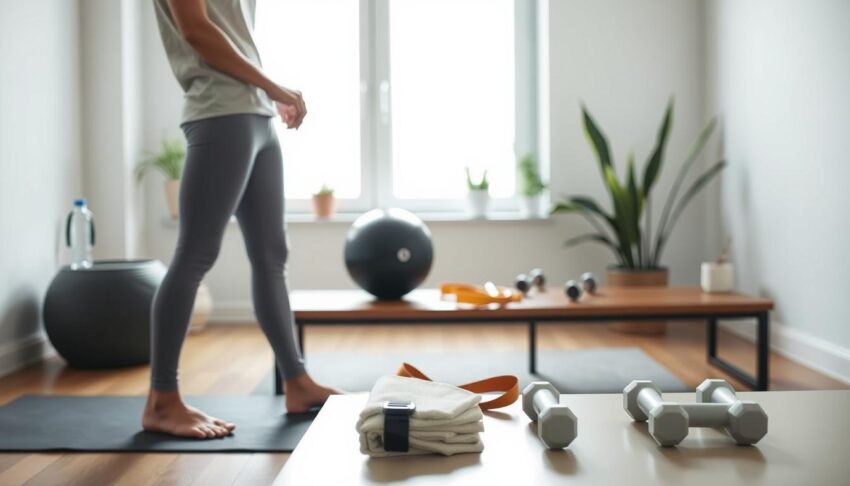
Start small and build steady wins. Regular movement lifts mood, improves sleep, and helps keep blood pressure in check. Over time, consistent workouts support healthy weight, preserve muscle mass, and lower chronic disease risk.
You don’t need a gym to make real progress. A short, balanced plan that mixes total-body strength, light cardio, and mobility can fit into busy schedules. Many people begin with 20–30 minute, low-impact sessions using 5–15 lb dumbbells and optional bands.
U.S. guidelines suggest at least 150 minutes of moderate aerobic activity plus two strength sessions weekly. This program focuses on simple moves you can repeat, track, and adapt so the plan suits your time and goals.

Key Takeaways
- Short, doable workouts build momentum and protect joint health.
- Mix strength, cardio, and mobility to support fitness and body composition.
- Use light weights or bands and aim for 20–30 minute sessions most days.
- Follow U.S. guidance: ~150 minutes aerobic plus two strength sessions weekly.
- Track reps, minutes, and steps to keep progress visible and motivating.
Start Strong: What Beginners Need to Know Before Exercising at Home
Check your health first. If new to vigorous activity or if you have chronic conditions, consult a healthcare professional so you can choose a safe starting point that matches your fitness level.
Set small, measurable goals and build a simple plan. Begin by increasing reps (for example, 10 to 15) or adding a few minutes (20 to 30) over several weeks. This keeps training steady without burnout.
Design a weekly routine that targets all major muscle groups. Combine basic upper body and lower body moves with walking or low‑impact cardio. If you lack gear, use bodyweight moves or household substitutes like water bottles for arm work.
Keep first workouts short to learn form. Protect one time slot each day so sessions become a habit. Track simple metrics—minutes, reps, how your body feels—to see progress and tweak the plan as your confidence grows.
- Check health and match intensity to your current levels.
- Pick clear goals and increase training volume slowly.
- Mix strength, walking, and joint-friendly options across the week.
Safety First and Smart Goals: Set Your Beginner Workout Routine Up for Success
A short health screen sets the stage for safer, more effective workouts. Get a physical exam if you plan to start vigorous activity or if you have chronic conditions. This quick check helps match training intensity to your current health.
Check your health and know your fitness level
Start small and stay sensible. If a clinician flags limits, adjust moves and time. Note any medications or joint issues before you begin.
How much time per week: 150 minutes cardio + two strength sessions
Use the U.S. guideline of 150 minutes of moderate activity or 75 minutes vigorous, plus at least two strength sessions that target major muscle groups. Block simple times on your calendar so goals are clear.
Listen to your body: pain vs. effort and when to rest
- Know the difference: effort feels like muscle work and heavier breathing; pain is sharp or lingering—stop if it occurs.
- Schedule intentional rest to help recovery and reduce soreness.
- Warm up before sessions and cool down after to protect joints and muscle tissue.
- If life gets busy, choose consistency over long sessions—short workouts still add up.
Minimal Gear, Maximum Results: Bodyweight, Dumbbells, and Bands
Minimal gear can still deliver major gains when you pick the right tools and moves. Start with one reliable set and add pieces as you progress.
Smart starter picks:
- Begin with a single pair of 5–10 lb dumbbells to learn form and safely build strength.
- Add a mini loop resistance band to target glutes and leg muscles without heavy weight.
- Later, consider one heavier dumbbell or a kettlebell for deadlifts and goblet squats.
If you lack gear, bodyweight options still work well. Use water bottles, cans, or a packed backpack to add light resistance to upper-body moves.
Try all-standing, low-impact sessions to protect knees and back while keeping your heart rate up. Choose a weight that lets you do 10–15 controlled reps—if you swing, lower the load.
“Progress by increasing reps first, then weight, so joints and connective tissue adapt.”
Warm Up and Cool Down: The Simple Steps That Boost Results
Begin with a focused warm-up to wake up key muscles and reduce injury risk. Warming raises body temperature and prepares joints so your training feels smoother.
Dynamic warm-up: upper, lower, and full body
Spend 3-5 minutes on low impact moves that match the session ahead. For upper-body days, try arm circles, band pull-aparts, and wall pushups to prime the shoulders and chest.
For lower-body sessions, include walking lunges, leg swings, and half squats to mobilize hips and knees. On full-body days, combine marching in place with inchworms or hip openers.
Cool-down stretches to reduce soreness and improve mobility
After your workout, walk slowly for a minute to normalize breathing. Then hold static stretches—calves, quads, hamstrings, hip flexors, chest, and back—20–30 seconds each.
- Keep motions controlled; feel gentle tension, not pain.
- If short on time, do a brief warm-up rather than skipping it.
- Repeat the same sequence so it becomes a quick habit you can use anywhere.
“A short warm-up protects joints and boosts performance.”
Easy exercise routines for beginners at home
Combine simple moves into short blocks so every session is useful and doable. This section gives clear, low‑impact options you can repeat across the week. Pick 20–30 minute slots or stack two 10-minute segments when time is tight.
Total-body bodyweight circuit
Try a compact circuit: 2–3 rounds of 10 lunges per leg, 10 pushups (incline if needed), and 10 situps. Rest 60 seconds between rounds. This hits major muscle groups and builds stamina with only bodyweight.
Upper body strength routine
Do 10–15 reps of bicep curls, overhead presses, tricep kickbacks, and a chest/back pull variation. Use 3–7 lb dumbbells or water bottles. Complete 2–3 rounds with controlled tempo to protect joints and grow arm and shoulder strength.
Lower body strength routine
Focus on squats, side lunges, stationary lunges, calf raises, and glute bridges. Modify depth for knee comfort. Aim for 10–15 reps per move and 2–3 rounds to target legs, glutes, and core without heavy loading.
Low-impact cardio and mobility
Swap jumps for marching or step taps to keep impact low while boosting heart rate and burning calories. Try brisk indoor walking or a 20–30 minute zone 2 session with light weights.
- Keep most workouts low impact to protect joints.
- Include 5 minutes of mobility: hip openers, thoracic rotations, and hamstring stretches.
- Rotate sessions so sore areas can recover and training stays consistent.
“Start with control, then add reps or weight as form improves.”
Your Beginner Week: A Simple At-Home Plan That Fits Your Schedule
Build a seven‑day plan that fits your schedule and keeps progress steady. This model mixes two to three strength days with walking or low‑impact cardio and one to two lighter recovery days.

Strength days: three rounds of basics in 10–25 minutes
Keep strength blocks short. Do three rounds of compound moves. Aim for 10 reps per set and finish in 10–25 minutes so the workout feels doable and sustainable.
Walking and low‑impact cardio: vary minutes and intensity
Alternate brisk walking and gentler cardio sessions. Change pace and time to build endurance without extra impact. A 20–30 minute brisk walk works well midweek.
Active recovery and rest days: yoga, stretching, and steps
Use a rest day for 5–10 minutes of mobility or a gentle yoga flow. Light walking and stretching help soreness and keep you moving without strain.
Sample flow
- Day 1: Total‑body strength, 20–30 minutes.
- Day 2: Brisk walk, 20–30 minutes.
- Day 3: Upper body with dumbbells (10 reps x 3 rounds).
- Day 4: Rest or 5–10 minutes mobility.
- Day 5: Lower body strength, 20–30 minutes (focus on leg control).
- Day 6: Standing cardio + core, 15–20 minutes.
- Day 7: Longer walk, 30–45 minutes.
“Keep sessions short on busy days and longer when you have time—consistency beats perfection.”
Progress At Your Pace: Reps, Weight, Time, and Exercise Variations
Progress happens when you nudge reps, weight, or time in small, steady steps. Start at a level where you can complete 10 controlled reps with good form. Increasing slowly protects joints and builds reliable gains in strength and muscle.
Level up gradually
Begin with 10 reps and add to 12–15 over a couple of weeks once form stays solid. Use 3–7 lb for smaller upper-body moves and 5–10 lb for many total-body lifts.
Add weight only when you can do 15 clean reps without swinging or compensating. Increase session time by 2–5 minutes when you feel ready.
Modifications for knees, shoulders, and low-impact needs
For knee sensitivity, choose supported squats, shallow ranges, or no-lunge options to stay pain-free. For shoulder issues, favor neutral-grip presses, reduced overhead range, or extra rows and carries.
- Alternate harder and easier days to protect recovery and let muscle mass grow.
- Track weights, reps, and times to plan your next small increase.
- Keep most progress low-impact: standing variations and slower tempos still challenge strength.
“Small, steady increases in load and time build lasting strength without injury.”
Short on Time? Try Mini-Workouts, Standing Routines, and Step Goals
Short, focused bursts of movement can replace a single long session and keep you consistent. Breaking activity into small blocks makes daily progress realistic when time is scarce.
Three 10-minute sessions—morning, midday, and evening—add up fast. Each block can be a single standing circuit that pairs light strength with steady steps.

Three 10-minute sessions for busy days
Try a simple template: 1 minute marching, 10 squats, 10 overhead presses, repeat. Do this for ten minutes to raise heart rate without impact.
All-standing, low-impact circuits and strength-and-steps combos
Use all-standing moves to protect joints. Combine step marches with single-leg taps and band pulls to work legs and upper body in one short circuit.
- Use a step counter to nudge daily movement and reach step goals.
- Stack mini sessions after coffee or a meeting so they become a habit.
- If legs feel heavy, switch to gentle marching and mobility for a quick reset.
“Small, consistent bouts of movement reduce barriers and keep you moving long term.”
Stay Motivated: Build Habits, Track Wins, and Make It Fun
Make motivation simple by linking workouts to daily habits you already do. Put your sessions on the calendar so they compete with nothing else. Treat each block as an important appointment and protect that time.
Habit-stack with routine cues. After coffee, post-lunch, or right after work are reliable anchors. Small habit changes each day add up and keep your program consistent.
Track progress to build momentum
Record simple metrics: steps, reps, weights, minutes, and estimated calories. Seeing growth in numbers makes the plan feel real and motivates you to push next week.
Accountability and variety
Create a playlist, join a class, or pair with a friend so workouts stay social and fun. Rotate standing circuits, cardio bursts, and dumbbells sessions to avoid boredom and keep your fitness gains steady.
“Celebrate small wins weekly to reinforce the behaviors that move you forward.”
- Set up gear and space the night before to remove friction.
- Use gentle self-talk and flexible scheduling to recover quickly after missed times.
- Revisit your plan monthly and nudge training up slightly so the body and mind stay challenged.
Conclusion
Finish strong with a realistic workout routine that fits your week. Balance short strength blocks, simple cardio, and at least one lighter day to protect recovery and build strength over time.
Walk often and split steps into small chunks when time is tight. As form improves, nudge reps and add a light dumbbell to challenge your muscles and support muscle mass without excess strain.
Expect benefits beyond weight loss: better energy, confidence, and daily movement. Keep this plan flexible, track minutes and loads, and return to it whenever you need a reset. Small, steady training beats sporadic sprints.