

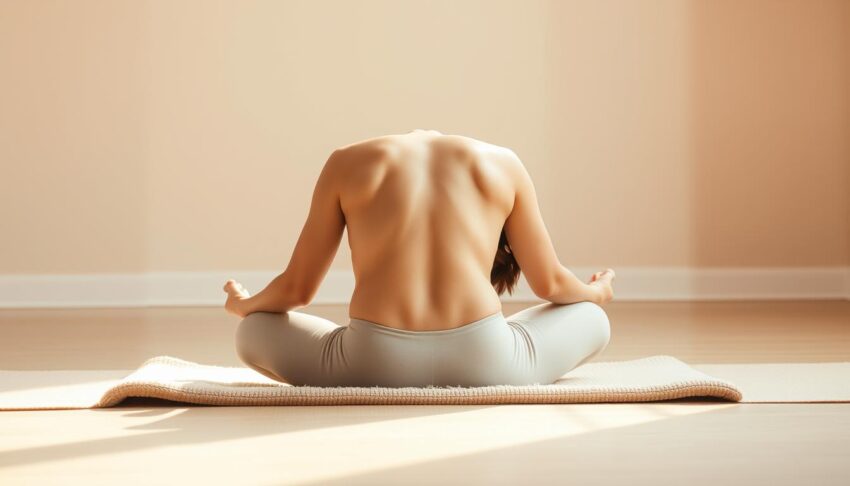
Welcome. This short guide is built for absolute beginners who want a safe, gentle on-ramp without pressure to be flexible or strong on day one.
Start small. A steady practice can improve overall health, ease stress, steady your mood, and build practical strength and mobility while staying kind to your joints.
Each pose section gives step-by-step cues, safety notes, and beginner variations so the content is practical and actionable right away.
Scan the list to find simple yoga poses, alignment landmarks, and breathing cues. The guide moves from floor resets to standing shapes and ends with calming stretches.
No fancy gear needed — props can be simple household items. Pick two or three poses today and spend a few minutes with them. Bookmark this page and return as you grow more confident.

Key Takeaways
- Designed for beginners with no pressure to be flexible or strong.
- Regular practice supports mental calm and better physical function.
- Each pose includes cues, safety notes, and easy modifications.
- No special gear required — household props work fine.
- Progresses from floor resets to standing and then to relaxing stretches.
- Start small: pick a few poses and practice daily for steady gains.
Why start with easy yoga exercises right now
Starting with gentle postures makes it simple to build a steady habit that supports both body and mind.
Beginner-friendly benefits for body and mind
Small, slower classes—Hatha, Yin, or restorative—let you stay in each pose and learn safe alignment. This reduces strain on the back and encourages better posture over time.
Consistent practice brings clear benefits: reduced stress, gentle strength, improved sleep, and steady gains in flexibility and daily energy.
Breath as the bridge: uniting mind and movement
Treat the breath as an anchor. Smooth inhales and longer exhales calm the nervous system and make each position feel more spacious.
- Beginner-friendly styles give time to feel alignment and recognize safe sensations.
- Pay attention to breathing patterns; if you can’t breathe steadily, modify the pose.
- Online beginner classes with clear verbal cues can support home practice as much as in-person sessions.
How to use this beginner listicle for your first practice
Use this list as a simple roadmap for your first few minutes on the mat, keeping each move clear and manageable. Begin by skimming the full list of poses, then choose three to five that feel approachable today.
Roll out your mat on a non-slip floor and set a timer for 10 minutes. Hold each pose about 10 seconds at first while taking long, slow, deep breaths.
Read the alignment cues for each shape, try them slowly, and notice what your body feels. Your toes, knees, and shoulders don’t need to match a photo; adjust to your current range.
- Repeat each posture once or twice and only increase holds when stable.
- Keep simple props nearby — a towel, books, or cushions to support hips or legs.
- If solo practice feels hard, press play on a beginner class and use this written content as a helpful reference.
Finish with a short seated or lying breathing pause so your nervous system registers the calm. Revisit these cues after practice to note what worked and what to refine next time.
Easy yoga exercises
Start your session with a safety-first mindset so movement helps your body instead of stressing it. If a posture stops your steady breath, back off and try a gentler option.
Safety first: listen to your breath, not your ego
Choose familiar styles and instructors until you find a match. Favor slow, low-risk movements so your back, hips, and shoulders can adapt without irritation.
- Keep every pose conversational for your breath—if you lose your exhale, reduce depth, add support, or come out.
- If your neck feels compressed, lengthen through the crown and soften the jaw before moving deeper.
- Use props as tools that help alignment; they let muscles work safely rather than forcing range.
- Notice mild opening versus warning pain; stop for sharpness, numbness, or pinching.
- Take rests in a restful child posture when needed and end while you still feel good.
For the beginner journey, replace judgment with curiosity. Move slower than you expect and let steady breathing guide each choice.
Mountain Pose (Tadasana): find your footing and posture
Stand tall and steady to explore how a simple upright stance can reset your posture and focus.
Quick cues to build a neutral stack
Stand with your feet together or hip-width apart. Spread your toes and press evenly from heel to the front of each foot.
Soften your knees slightly and engage your legs by drawing the thighs up. Pull the lower belly in to support a long spine.
Float your hands by your sides with palms facing in. Broaden the collarbones and draw the shoulders down and back so the ribcage stacks over the pelvis.
Imagine the crown of your head lifting toward the ceiling while your feet root into the ground. Keep the gaze soft at eye level.
- Balance firm effort in the legs with gentle ease in the face and throat.
- If you sway, widen the base slightly and press through the big toe mound, little toe mound, and heel.
- Hold for two to four breaths. Use this pose between standing shapes to reset orientation and calm the body.
Tip: Practice this mountain pose as a daily check-in to tune alignment before moving into other standing postures in your yoga routine.
Child’s Pose (Balasana): reset your back and hips on the mat
Start on your knees. From a tall kneel, keep the shins flat and sit your hips back toward your heels. Widen the knees a little more than your torso to let your chest drop comfortably toward the floor.
Walk your hands forward along the mat until your torso rests on your thighs and your forehead meets the mat or a cushion. Breathe slowly into the back body, feeling the ribs expand sideways and the low back unwind with each gentle exhale.
Stay here for five to ten slow breaths. This simple pose helps decompress the back while opening the hips and calming the nervous system.
- If a knee feels sore, place a folded blanket between calves and thighs or keep knees closer together for comfort.
- Rest arms forward for a shoulder stretch or set them alongside your body to ease the neck and upper back.
- If hips don’t touch heels, tuck a bolster or pillows under your seat to remove strain.
- Use this pose between active shapes to reset your breath without leaving the floor.
To come up, walk your hands back toward your knees and slowly stack your spine. Keep the breath steady as you rise and return to standing or your next yoga pose.
Cat-Cow: gentle spinal movements to warm up the back
Start on all fours with your wrists under your shoulders and knees under your hips. Spread your fingers to support the wrists and let the base feel steady.
On the exhale, tuck the tail and round the spine into Cat. Chin moves toward the chest; allow the neck and head to soften without forcing.
With a slow inhale, move into Cow: arch the back, lift the tailbone, draw the chest forward, and lift the gaze just enough to keep the neck long.
Coordinate inhale and exhale with motion
“Let the breath lead each arc—one calm inhale for Cow, one soft exhale for Cat.”
- Distribute weight through the whole hand; keep the shoulders away from the ears.
- For tender wrists, try on fists or forearms, or add padding under the heels of the hands.
- Move for five to ten breath cycles, keeping the tempo smooth so the spine warms without compression.
Neck-friendly tips to protect your cervical spine
Focus more on upper-back opening than craning the head. Keep the movement gentle and guided by breath.
Finish in neutral tabletop and notice the warmth and length along your back before moving on.
Downward Facing Dog (Adho Mukha Svanasana): full-body stretch for tight legs and shoulders
Start in high plank, then lift your hips up and back to shape a steady inverted V that lengthens the whole spine.
Hands, feet, and hips: keys to a comfortable shape
Place your hands under the shoulders and spread fingers wide to grip the mat. Press through the fingertip pads so weight moves away from the wrist base.
Reach the sitting bones toward the sky, draw the shoulder blades down, and press the backs of the legs away. Keep the head between the arms with a soft neck.
- Root through toes and feet, aiming heels toward the ground without forcing them.
- Align wrists roughly under the front of the shoulders when you return to plank.
- Hold for two to four steady breaths.
Beginner modifications: bent knees and lifted heels
If hamstrings are tight, keep a gentle bend in the knees and lift the heels. Pedal one foot at a time to mobilize calves and hamstrings.
Common mistakes that strain wrists or lower back
Avoid collapsing through the shoulders or letting the low back round. If the back rounds, bend the knees more and lift the hips higher.
Also don’t step so short the pose feels cramped—walk hands forward or feet back for room. Return to knees to rest and repeat when needed.
Warrior I and II: confidence-building lunges for legs, hips, and focus
Confident lunges like Warrior I and II build strength in your legs while sharpening focus. These standing poses teach stable alignment and steady breathing.
For Warrior I, step one foot forward from a wide stance and turn the back foot about 45 degrees. Bend the front knee so it stacks over the ankle and square your hips and chest to the front. Press the outer edge of the back foot down and lift the inner arch for a steady base.
Square vs. open hips: knowing the difference
In Warrior I, aim to square hips forward so both hip points face the front. In Warrior II, open the hips toward the long edge of the mat while keeping the front knee tracking over the middle toes.
Front knee tracking and shoulder placement
Keep the front knee aligned above the heel and avoid collapsing inward. Reach arms overhead in Warrior I without shrugging the shoulders; in Warrior II, extend arms at shoulder height and gaze over the front hand.
- Balance both legs: front thigh active, back leg long and engaged.
- If heels feel unstable, widen the stance slightly for more support.
- Shorten the lunge if your hip or knee is sensitive and focus on pain-free alignment.
Triangle Pose (Trikonasana): side-body length and balance
Begin by widening your stance, then hinge at the front hip so your lower hand can find a block or the ground outside the front foot. From Warrior II keep a small bend as you lower the front hand to a block outside the front leg while the top hand rests at the hip.
Straighten the front leg comfortably and press into the back foot to steady the base. Rotate the torso open as you reach the top hand up, stacking the shoulders and keeping length through both sides of the body.
Keep the bottom side of your waist long to distribute the stretch evenly and avoid pinching in the back. Press the back heel into the ground and lift the inner arch of the front foot so effort flows through both feet and legs.
- Reach the arms energetically in opposite directions to create space across the collarbones.
- If hamstrings feel tight, shorten the stance and micro-bend the front knee while keeping the torso long.
- Use a block under the lower hand to keep the chest broad and the spine neutral.
- Choose a gaze that feels steady—up, forward, or down—to protect the neck.
- To rise, root through your feet and draw the torso back to vertical with control.
Chair Pose (Utkatasana): ignite your quads, glutes, and core
Chair Pose builds heat by asking you to sit back into the hips while keeping a long, active spine. This standing pose engages the core and challenges balance. Use it to strengthen your legs and wake up the glutes.
Weight in heels and long spine cues
Stand tall. Raise your arms overhead by the ears and bend the knees, as if lowering onto an invisible chair. Keep the chest lifted and the ribs drawing toward the pelvis so the low back does not arch.
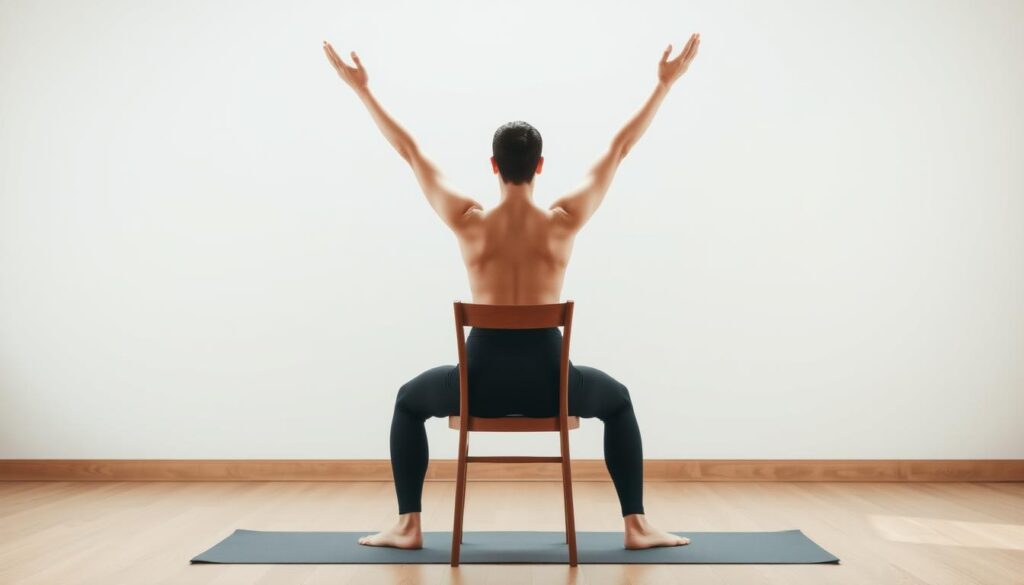
- Stand with feet together or hip-width, sit the hips back, and lift the arms by the ears without over-arching the back.
- Keep most weight in the heels so the knee tracks over the toes and does not push forward past the toes.
- Press evenly through both feet, engage inner thighs, and feel the sit bones reach back toward the ground.
- If the low back feels tight, tuck the tail slightly and breathe long; use a block between the thighs to protect the knees and activate the inner legs.
Hold the pose for three to five breaths, then stand up smoothly. Shake out your legs and reset before repeating. This simple cue set makes the pose useful in short yoga sequences or longer strength-focused routines.
Cobra Pose (Bhujangasana): strengthen back with safe extension
Lie face-down and let the breath guide a gentle lift that strengthens the spine. This pose builds strength across the low and mid back while opening the chest and shoulders.
Place your fingertips in line with the front of the shoulder bones and keep elbows close to the ribs. Ground the tops of your feet into the mat and press into the floor through your hands.
Protect your neck and lower back
On an inhale, squeeze the shoulder blades and lift the chest forward, drawing the shoulders away from the ears. Keep the back of the neck long by gazing slightly forward and down.
- Lie prone with tops of the feet pressing into the mat; hands alongside the ribs and elbows hugging in.
- Engage the lower belly so the lumbar area gets support and the bend spreads through the upper back.
- Press hands into the floor without locking elbows—think “lift the heart forward” not push up.
- Keep legs active and anchored through the toes to stabilize the pelvis on the floor.
- If shoulders or wrists feel pinchy, widen the hands or lift slightly less until breathing stays steady.
Hold for three to five steady breaths. Lower down with control and rest one cheek on your hands. Choose sensation over shape—this protects your long-term health and makes the pose sustainable in a beginner-friendly practice.
Happy Baby (Ananda Balasana): decompress the lower back and open hips
Lie on your back and draw both knees toward your armpits so the soles of your feet face the ceiling.
Reach your hands through the legs to hold the outer edges of the feet or hook your big toes. Keep the lower back gently pressing into the mat so your pelvis stays level and supported on the floor.
If your hamstrings feel tight, hold behind the thighs with a hand on each leg. This reduces leverage and keeps the breath calm while the hips open without force.
Soften your shoulders and jaw and let the neck rest neutral. Gently rock side to side to massage the low back and ease tension across the sacrum.
“Use Happy Baby as a short decompression to soothe the spine and widen the hips.”
- Stay for five to eight slow breaths, noticing space develop in the hips.
- If gripping the feet stresses the arms, loop a strap over each foot and relax the hands.
- Release one foot at a time, hug your knees, then set soles down to exit smoothly.
Seated Head-to-Knee (Janu Sirsasana): hamstring stretch with a gentle twist
Sit tall on your mat, extend both legs, then draw one knee in and open that hip to the side so the heel rests near the groin. Rotate your torso lightly toward the extended leg to line up the hinge, and keep the spine long before folding forward.
Use a strap or towel when hands can’t reach feet
Reach for the foot with both hands; if your hands can’t reach, loop a strap or towel around the sole to preserve length in the torso and avoid rounding.
- Sit tall, bend one knee, and open that hip so the heel sits by the groin.
- Keep a soft micro-bend in the extended knee to protect the back of the joint.
- Press the bottom of the bent foot lightly into inner calf or thigh—never on the knee.
- If the pelvis tucks, sit on a folded blanket or a block to create tilt for a safer hinge.
- Maintain lift through the chest so the stretch spreads evenly along the hamstring and side waist.
- Breathe slowly and fold only as the exhale allows deeper release.
- Hold for five to eight breaths, then rise with a long spine before switching sides.
- This pose combines a hamstring stretch with a subtle twist and hip opener, making it a useful cool-down choice in a beginner yoga sequence.
Cobbler’s Pose (Baddha Konasana): inner thigh release with support
Settle on the floor with a tall spine and let gravity invite a gentle opening across the inner thighs. Sit with the soles of the feet together and relax the knees toward the sides. Let the breath guide the pace so the groin eases without force.
Props that help:
blocks, cushions, and blankets under hips or knees
Sit on a folded blanket, cushion, or a low block to lift the hips. Raising the pelvis lets the knees drop more naturally and prevents the lower back from rounding.
If the knees sit high or feel tight, place a block or support beneath each knee. This removes muscular gripping and lets the adductors receive a steady, gravity-led stretch.
- Sit with soles together and use gravity to open the inner thighs.
- Elevate the hips on a blanket or block if the back rounds or knees lift.
- Support each knee with a prop so the legs can soften without effort.
- Keep the spine long; hinge only as far as the breath feels calm.
- Stay 8–10 slow breaths, then lift the knees and extend the legs to come out.
“Let your props do the work so your body can learn to release safely.”
Tree Pose (Vrksasana): improve balance and steady the mind
Find a steady standing anchor with Tree Pose to sharpen balance and calm the mind.
Start from Mountain Pose. Shift weight into one standing leg and lift the opposite foot.
Place the sole on the inner shin or thigh—never on the knee. Square hips and shoulders to face forward and press the lifted foot and standing leg together to create stability.
Find a nonmoving gaze at eye level. Soften the jaw and keep the breath calm to settle the mind. Bring your hands to the heart or reach them overhead while keeping the ribs drawn in and shoulders relaxed.
- Root the standing foot into the ground and lift through the crown of the head for length.
- If wobbly, touch a fingertip to a wall or keep the lifted toes on the floor as a kickstand.
- Use short holds at first and increase time as ankle strength and focus improve.
Repeat on the other side with patience, noting any differences between your two sides. Finish standing tall and notice the quiet steadiness Tree Pose can add to your practice.
Plank basics for beginners: build core and shoulder strength safely
Plank trains your whole trunk while teaching how to stack wrists, shoulders, and hips. Start with brief holds and focus on clean alignment before adding time.
Wrist stacking, long line from head to heels
Begin on all fours. Set your hands on the floor under the shoulders, fingers spread for a stable base.
Step one foot back, then the other, so your body forms a straight line from head to heels. Keep the arms strong and the head neutral.
- Press the palms into the mat and grip lightly with fingertips to ease wrist pressure.
- Hug the front ribs in and slightly tuck the tail to prevent the low back from sagging.
- Keep the gaze down and a little forward so the neck stays neutral and long.
- Press through the heels to engage the legs so the whole body works, not just the arms.
- If hips hike or drop, shorten the hold and adjust—perfect form beats long sloppy sets.
For an easier pose, lower to your knees while keeping a straight line from head to knees. Breathe steadily and aim for several short, high-quality repeats rather than one long, shaky attempt.
Tip: Exit with control by lowering knees, then sit back briefly before the next round.
Put it together: a simple beginner flow you can practice today
A compact sequence ties warming spinal movements to standing shapes and a soothing finish. This short flow fits into busy days and helps you learn steady alignment with calm breath.
Warm-up sequence on the floor
- Cat‑Cow — five slow rounds to mobilize the spine and warm the core.
- Rest in Child’s Pose for several breaths to settle the back and center the breath.
Standing series to build strength
From Downward Facing Dog (Adho Mukha Svanasana), bend the knees and lift the heels if hamstrings are tight. Step to the top of the mat into Mountain Pose to organize posture.
- Flow Warrior II both sides, refine front knee tracking.
- Sit back into Chair for three steady breaths to build leg and hip strength.
- Return to Dog, then practice Triangle with a block under the lower hand as needed.
Cool down and Savasana for presence
Lay back for Seated Head‑to‑Knee on each side, then Happy Baby to ease the hips and low back. Finish in Savasana for one to three minutes and let the movement integrate.
“Keep the sequence short and repeatable; three sessions per week with varied intensity is a helpful start.”
Props and gear: yoga mat, blocks, and smart support for beginners
A few well-chosen props make practicing safer and help you feel the intended alignment.
Props are tools, not crutches. A stable surface and a few supports let muscles relax so each pose teaches the right action.
Choose a grippy yoga mat that keeps your hands and feet from slipping. Grip lets you focus on alignment instead of fighting the floor.
- Keep two blocks nearby to raise the ground in Triangle, support your seat in Cobbler’s Pose, or bring the floor to your hands in forward folds.
- Folded blankets or cushions under the hips let the pelvis tip forward so seated shapes feel comfortable.
- Soft padding under knees or wrists makes weight-bearing positions accessible for beginners and protects joints during longer holds.
- Use a strap or towel to extend reach in seated folds; this preserves a long spine while you build flexibility.
- Consider a bolster or firm pillow for restorative endings to support breath-focused resets.
Store the mat unrolled or hung so setup is easy and the grip lasts. Over time, test different prop heights to find what unlocks the best version of each pose for your body.
Breathing and pacing tips to prevent strain and boost flexibility
Let steady breathing guide how you enter and leave each posture so the mind and body learn without strain. Move slowly and use the breath as a meter: inhale to reach or lengthen, exhale to soften and settle.
People often hold the breath when a shape gets challenging. If you can’t breathe, back off, add support, or shorten the range so tissues can relax and gain flexibility safely.
- Let breath set your pace—move on an inhale to lengthen, and exhale to release without forcing counts.
- When breath-holding starts, reduce depth or use props so the hips and back can open without tension.
- Favor nose breathing to keep focus calm and to help the nervous system accept gentle load across sets.
Alternate harder practice days with softer, slower sessions. Pause between poses for one or two breaths to check in and decide whether to repeat, modify, or move on.
“Progress comes from consistency and respect for limits, not from pushing deeper every day.”
Finish a short breathing period to lock in the benefits for long-term health and steady gains in confidence and range.
Practice schedule and recovery: how often beginners should do yoga
Set a realistic rhythm—three focused sessions a week often delivers the best early results.
Start small and steady. Begin with three short sessions per week so your body adapts while recovery keeps you fresh and motivated.
If you choose to move daily, alternate intensity: a 30-minute power flow one day, then a 20-minute restorative session the next. Track energy and soreness; if joints feel cranky, favor gentler choices.
Quick guide:
- Keep sessions bite-sized on busy days so consistency beats perfection.
- Revisit the same poses weekly to notice gains in stability, breath, and range.
- Rotate focus areas—hips/legs one day, back and posture the next—for balanced results.
Expect skills and understanding to develop over months, not days. Celebrate small wins like better sleep or fewer aches as real benefits to your long-term health.
“Patience and steady practice build flexibility and confidence more reliably than pushing harder every session.”
Review notes after each session and refine the way you approach new sequences with a beginner mindset.
Conclusion
,
Finish with a calm check-in. Pause and scan from your head to your toes. Notice breathing, balance, and any change in back comfort.
Starting small with approachable poses helps beginners build a steady practice that brings real benefits. Return often to Mountain Pose, Child Pose, and Downward Facing Dog to mark progress.
Let breath guide each movement so the mind stays present while the body learns safer alignment. Use props when needed and choose the way that fits your life—short home sessions or online classes both work.
Track simple wins: smoother breathing, steadier balance, and growing flexibility. Share a favorite pose with a friend, then gently lift the head and carry that calm into your day.