


Busy days demand fast, reliable tools. This friendly guide shows how brief, mindful movement can downshift your nervous system and bring quick calm. You don’t need a mat or a long class. Even one or two minutes in a single pose can move you out of fight‑or‑flight and into a steadier state.
Experts like Shweta Jain (MyYogaTeacher) and Anouska Shenn (The Office Yoga Company) emphasize diaphragmatic breathing and gentle alignment to stimulate the vagus nerve. Research links these approaches to lower anxiety, reduced cortisol, and better blood pressure.
Expect a listicle-style flow with clear steps, timing, and easy modifications. Safety cues and options for sensitive areas are included so poses feel good and last. Aim for micro-practices—tiny breaks that add up—and move at a pace that suits your mind and body.

Key Takeaways
- Short practices can reduce perceived stress and trigger quick relaxation.
- Breath work plus mindful movement helps calm the nervous system.
- One- to two-minute holds are effective when you’re busy.
- Instructions include alignment cues and gentle modifications.
- Experts and studies support these compact, daily micro-practices.
Why yoga works right now for stress relief and well‑being
When you combine gentle motion, breath control, and focused attention, the body’s alarm system begins to soften. This blend strengthens the mind‑body connection and delivers fast, practical relaxation you can use at work or home.
Short sessions bring real benefits: better mood, deeper sleep, quicker recovery from tension, and a boost in resilience. A 2024 Frontiers in Public Health paper found practice reduces occupational strain and helps prevent burnout.
Physiological shifts support these gains. Brief practice can lower blood pressure, improve breathing, and change hormone levels — raising endorphins and endocannabinoids that ease pain and lift mood.
Even modest time commitments help: studies show reductions in anxiety and depression with short, regular practice. Over weeks, certain approaches (like Kundalini) also increase self‑compassion and spiritual well‑being.
The rest of this guide uses small, easy yoga poses and breath patterns you can try in minutes. A few intentional minutes now can trigger a meaningful relaxation response without special equipment or experience.
- Mindful movement + breath = immediate relaxation.
- Fast, evidence‑backed gains for busy people.
- Physical and hormonal changes support lasting health.
How yoga relieves stress: breathing, the nervous system, and your body
A few mindful breaths can flip your nervous system from urgent to calm.
From fight‑or‑flight to calm: vagus nerve and HPA axis basics
The HPA axis links the brain and adrenal glands and drives the fight‑or‑flight response. Regular practice reduces sympathetic arousal and boosts parasympathetic tone.
That shift matters: reduced reactivity means calmer choices and steadier energy when demands rise.
Evidence snapshot: lower blood pressure, anxiety, and cortisol
Diaphragmatic breathing stimulates the vagus nerve, which slows heart rate and supports clearer thinking. Gentle movement plus breath also sharpens proprioception and soothes the body.
- Blood pressure: brief sessions can lower measurements in some people.
- Cortisol & anxiety: studies report drops after consistent practice.
- Depression: hatha approaches show promise as adjunctive care in MDD trials.
Practical point: mindful breathing is portable—no props needed. A few slow breaths start the cascade toward relaxation and lasting relief.
Quick start: what you need to practice yoga at home in minutes
You only need a few household items to turn a corner of your room into a calm practice spot. Clear a small space, roll out a mat or towel on the floor, and pick a stable wall for support.
Mats, walls, pillows: everyday props that make poses easier
Gather a few basics: a mat or towel, a blanket, and soft pillows or rolled towels. Books work well as makeshift blocks.
Quick setup checks: remove shoes, relax your head and feet, and place your hands where they feel grounded. Take one minute to close your eyes and breathe, softening chest and back before you move.
- Choose a spot near a wall to use for Legs Up the Wall and supported holds.
- Use pillows under the hips or head to boost comfort and steady the body.
- Set a timer for a few minutes so the practice feels doable and repeatable.
- Adjust arms and alignment until you feel steady; small shifts under the back or knees help relaxation.
Remember: gentle, slower flows and mindful breathing while you set up lower joint strain and make the practice more supportive and sustainable.
Simple yoga exercises for stress relief
A handful of floor and seated postures can ease tension quickly and gently.
Standing Forward Fold (Uttanasana)
From standing, bend knees and hinge from the hips. Hands to the floor or hold elbows; soften the jaw, neck, and shoulders. Shift weight to the balls of the feet and hold the pose for five breaths. Avoid if you have a herniated disk or uncontrolled high blood pressure.
Child’s Pose (Balasana)
Kneel, sit back on the heels and fold the torso over the legs. Forehead to the mat, arms forward or by your sides. Breathe into the back body for 5–10 breaths to soothe the adrenals and calm a busy mind.
Legs Up the Wall (Viparita Karani)
Sit beside a wall, roll down and swing legs up. Relax feet and legs and rest 1–5 minutes. Come out sooner if you feel tingling or numbness in the feet. This position supports lymph circulation and a nervous system reset.
- Hold poses with gentle breaths; bend knees in deep forward folds as needed.
- Use a block or pillow under hips, sacrum, or knees for comfort.
- Let exhalations guide release and notice shifts in body and mind.
Breathing made simple: quick techniques to calm anxiety
A few intentional breaths can change your physiology and calm a busy head in minutes. Use two easy patterns to steady the mind and calm the body. Both fit at a desk, in a chair, or during a short break.
Diaphragmatic breathing: three to five slow breaths to reset
How to: sit or stand tall. Place one hand on your belly and one on your chest. Inhale through the nose so the belly lifts, not the chest.
Exhale longer than you inhale to cue relaxation. Repeat three to five breaths as a quick reset to ease anxiety and settle the nervous system.
Elongated exhale: extend out-breath to trigger relaxation
Try this count: inhale for 4, exhale for 6–8. The longer out-breath amplifies parasympathetic tone and lowers heart rate.
- Posture cue: lengthen the spine gently; avoid arching the back. Relax the jaw and brow.
- Pair the breath with a calming pose, such as Child’s Pose or a seated fold, to deepen relaxation.
- Even a few cycles change how your system feels. Make this practice a portable tool for steady focus and relief.
One‑minute yoga breaks you can do anywhere
A sixty‑second physical pause can interrupt a stress spiral and give your nervous system a break. Mini breaks across the day stop tension from stacking and bring fast relaxation to the head and body.
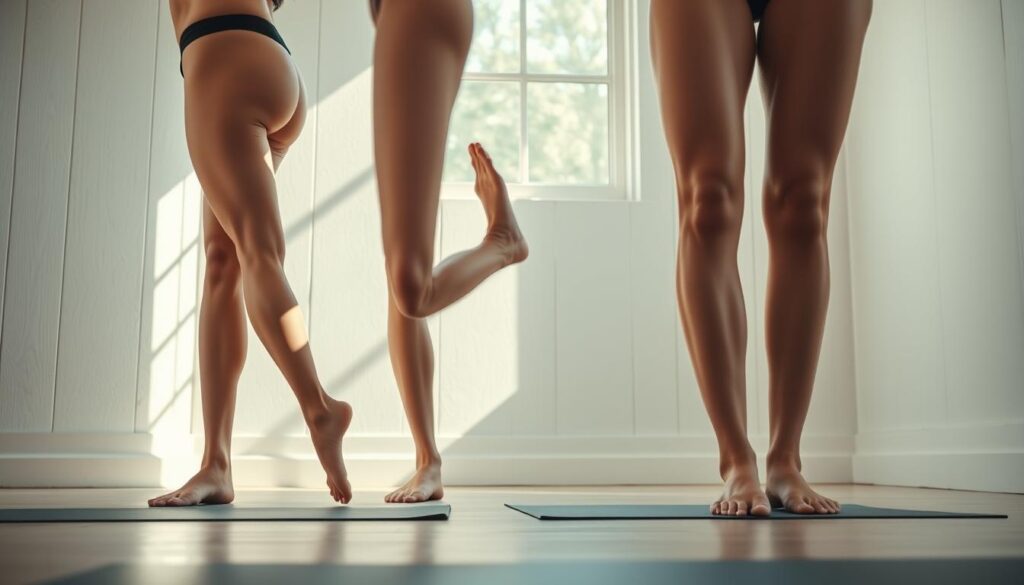
Desk Forward Fold: arms by your sides, release your head and neck
Stand or sit tall, soften the knees, and hinge from the hips. Let your arms hang by your sides and drop your head and neck toward the floor. Breathe slowly for up to 60 seconds.
Seated option: rest forearms on your thighs, relax the shoulders, and lengthen the exhale to feel quick relaxation without leaving the chair.
Wall‑supported pause: legs up the wall before bedtime
Scoot close to a wall and swing your legs up so your back rests on the floor. Adjust until your body feels at ease and relax your feet and legs. Hold for one minute or extend to 5–10 minutes when time allows.
- Safety: if feet tingle, bend the knees or come out slowly.
- Keep your hands where they feel natural and grounded; no need to touch the floor.
- Notice where you feel benefits most — head, back, or legs — and repeat as needed.
Safety, modifications, and tips for sensitive backs, knees, and blood pressure
Small changes in alignment and props can protect sensitive backs and knees while keeping the calming benefits intact. Use mindful setup and slow transitions to reduce strain and help your system settle.
Props and alignment: flat back, supported hips, and neutral neck
Aim for a comfortable flat back in neutral positions. Support hips with a blanket or bolster to ease the low back and keep the head and neck neutral.
Place blocks or folded towels under knees and hips on the floor. Keep hands where they feel steady and use arms sides or wide for balance.
When to skip or adjust a pose: herniated disks, hypertension, and tingling feet
Avoid deep forward folds if you have a herniated disk or uncontrolled blood pressure. Cue the forward hips gently and keep even weight in the feet.
If Legs Up the Wall brings tingling, bend the knees or exit slowly. Support Bridge Pose with a block under the sacrum to protect knees and shoulders.
- Keep movements slow and aligned; forward hips should lead from the pelvis.
- Use props on the floor to protect joints and find ease in each pose.
- Thoughtful setup and steady hands reduce strain and help the body find calm and relief.
Build a five‑ to ten‑minute routine that sticks
Build a tiny routine you actually do—five to ten minutes that fits into a busy day. Use a mat or towel, pick one steady position between moves, and set a gentle timer.
Example 5‑minute flow: Child’s Pose (5 breaths). Cat Stretch (5–10 rounds). Standing Forward Fold (5 breaths). Savasana or quiet rest (1–2 minutes).
Example 10‑minute flow: Seated Forward Fold variation (1–2 minutes each side). Reclined Twist (30–60 seconds each side). Bridge Pose (5 breaths). Legs Up the Wall (2–3 minutes).
Tip: breathe with a simple count (try 4–6 breaths per shape) to steady the system and ease the back and shoulders.
“Small, regular practice beats an occasional long session every time.”
Track the benefits you notice—less muscle tension, calmer mind, or better sleep. Consistency matters more than intensity; tiny daily sessions of practicing yoga will help relieve stress and support long‑term health.

- Set a timer for the minutes you have and keep transitions slow.
- Use one prop (mat, towel, or pillow) to simplify setup.
- Repeat this loop daily to make the routine automatic.
Conclusion
,
Conclusion
Choose one pose, settle in, and breathe. Pick a position you can hold for several calm breaths and notice how the mind and body begin to ease. Short practice sessions can lower blood pressure, reduce cortisol, and ease anxiety and depression symptoms over time.
Use household supports—a wall, mat, or towel on the floor—and keep comfort first: soft knees, relaxed neck and shoulders, head and palms resting where they feel steady. Try one‑minute resets during the day and a gentle 5–10 minute routine before bed to build lasting relaxation and health.
Start today with the pose that calls to you. Your nervous system will thank you with each measured breath.